


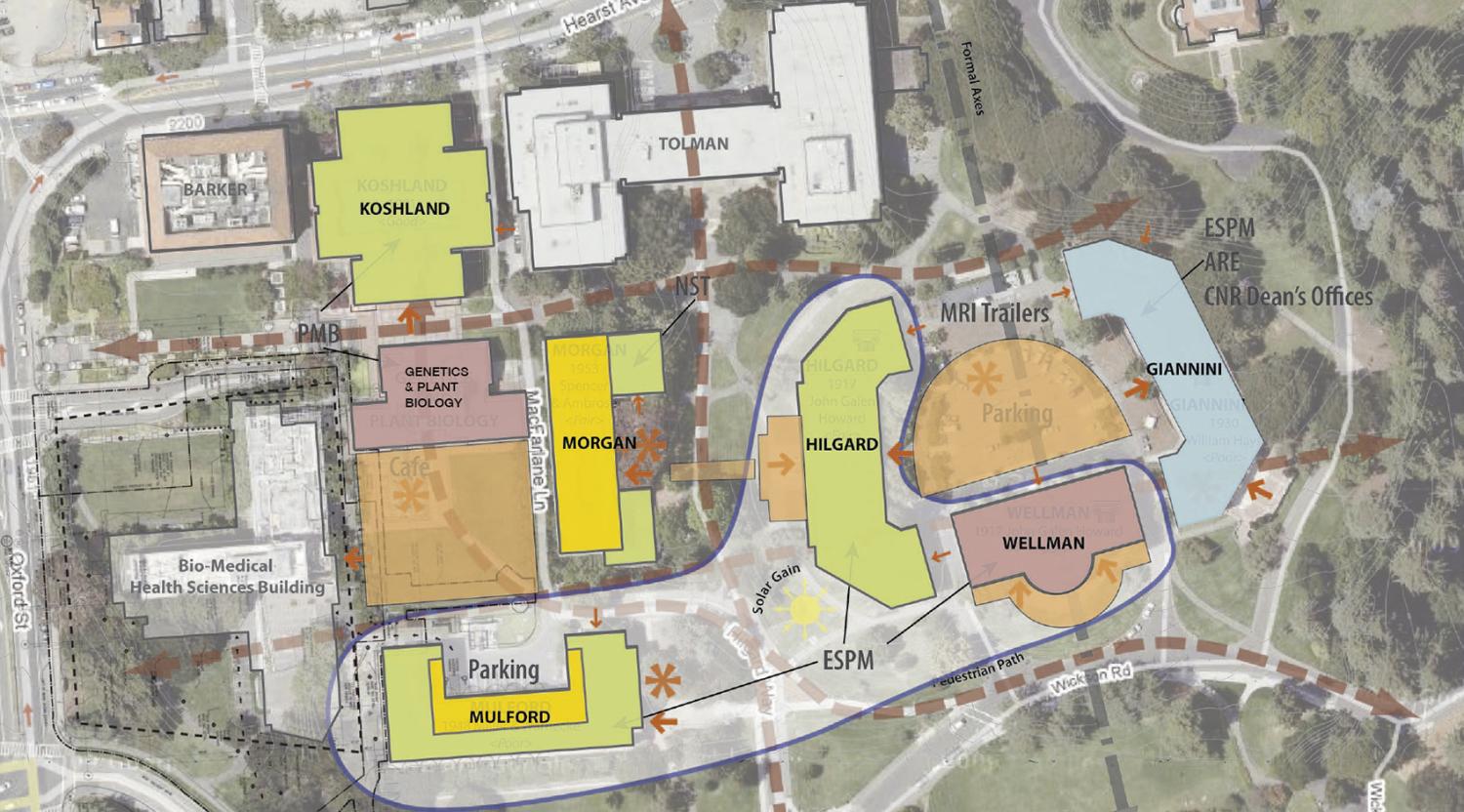
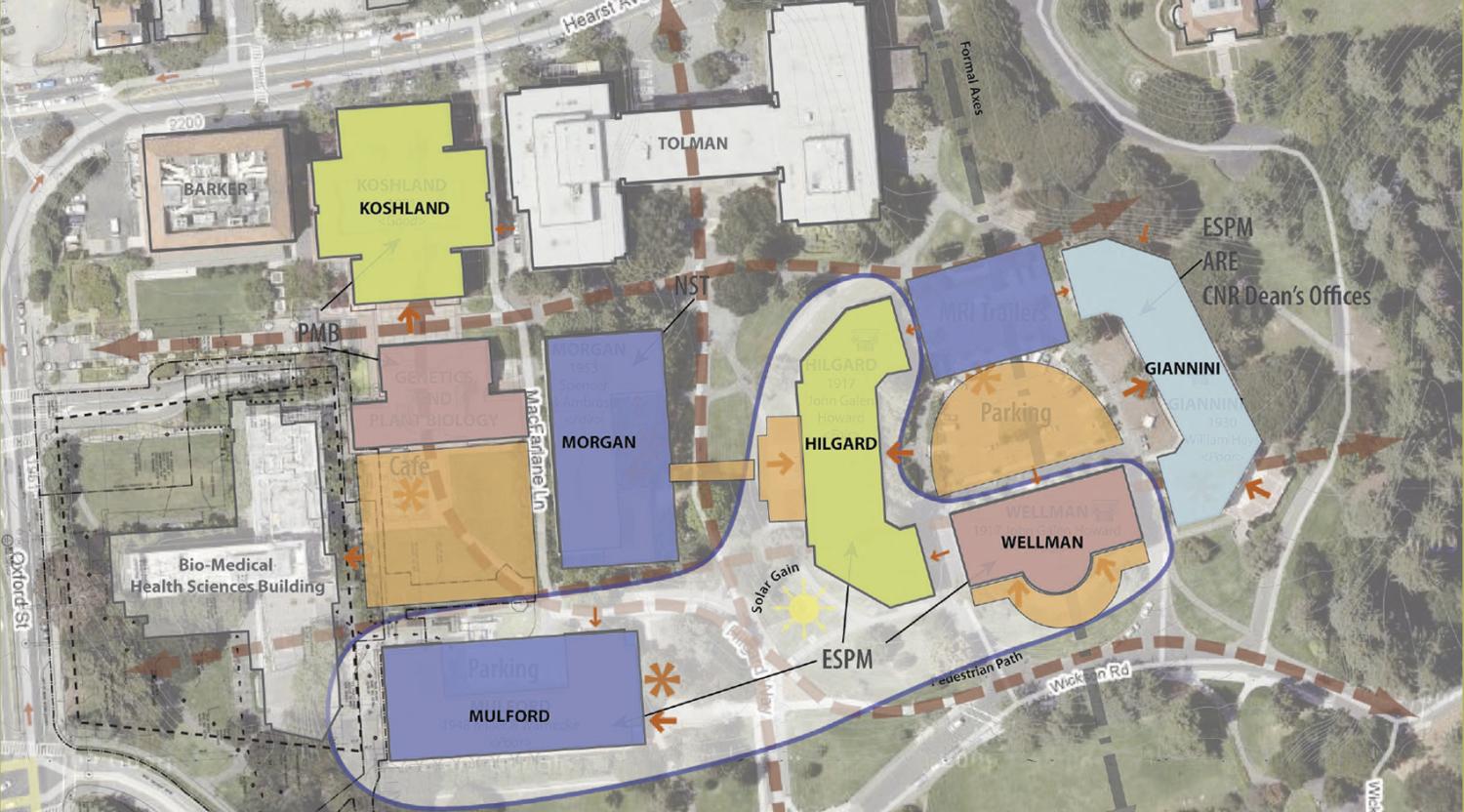
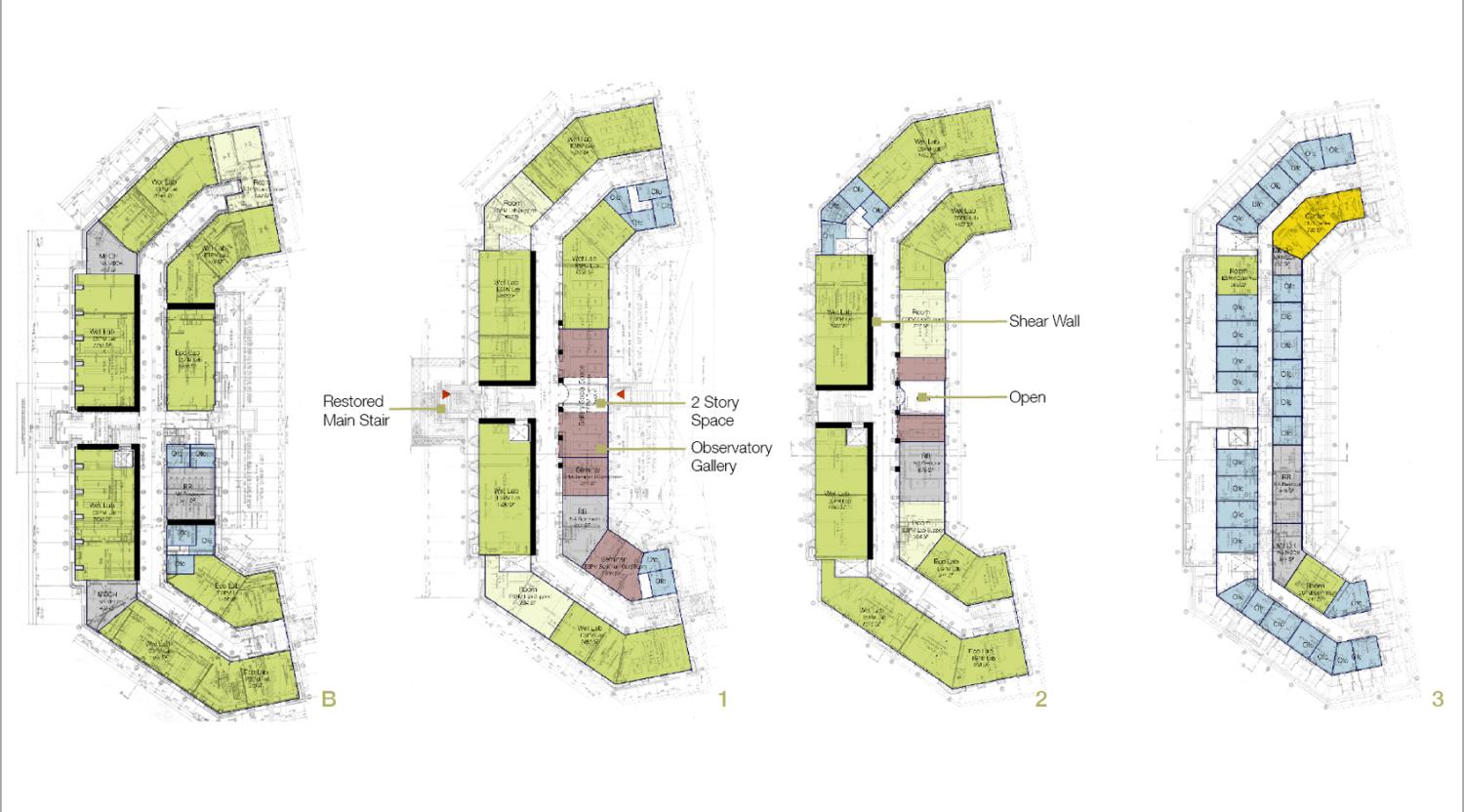

Working closely with faculty, students, and staff from four departments, we developed a 20-year Strategic Master Plan for the College of Natural Resources. Through intensive workshops and collaborative dialogue, we explored renovation and expansion options for six College-occupied buildings, providing cost estimates and test fits to guide decision-making. The plan balanced diverse priorities, from preserving historic structures to advancing multidisciplinary ecological learning and ensuring fiscal responsibility. The result is a clear, phased framework that aligns capital priorities with fundraising goals while positioning College facilities as both teaching resources and demonstrations of ecological sustainability. Our work has spanned two Deans, reflecting a long-term partnership and a commitment to responsive, evolving planning.
Berkeley, CA
Location
Giannini Hall 35,500 ASF
Wellman Hall 20,500 ASF
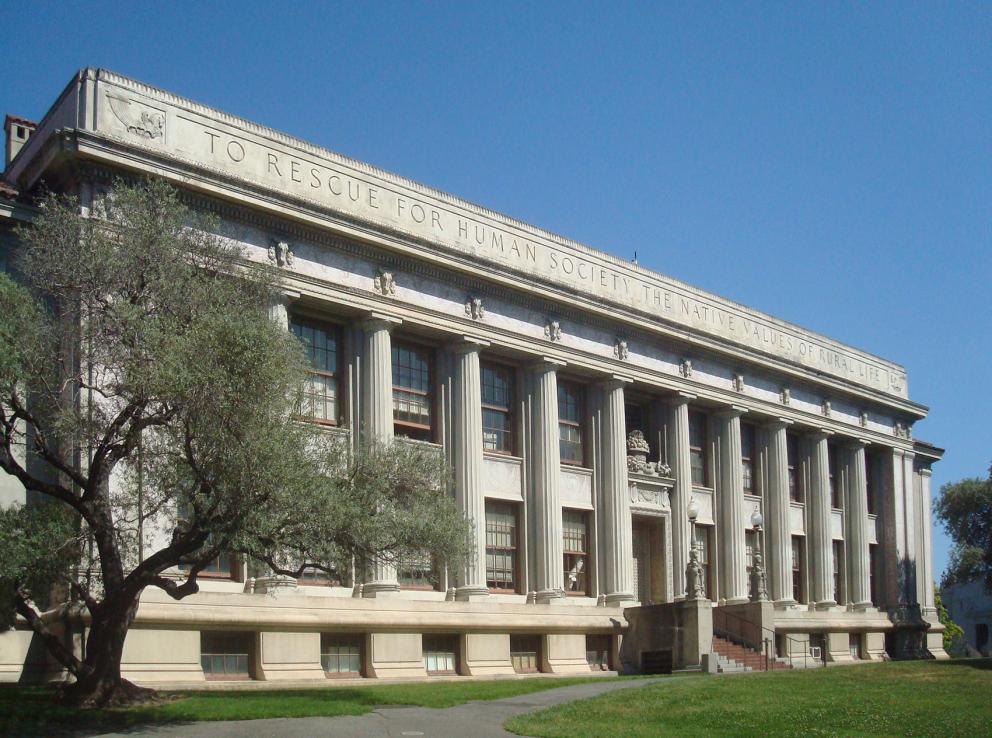
Hilgard Hall 46,650 ASF
Mulford Hall 40,000 ASF
Morgan Hall 33,000 ASF
Koshland Hall 57,700 ASF
Size
COMPLETED
STATUS
Frederic Knapp
Historic Consultant
Rumsey Engineering
Mechanical
Design for Science
Lab Consultant
Janiele Maffei
Structural
Oppenheim Lewis
Cost Estimating
Berkeley, CA
Location
Giannini Hall 35,500 ASF
Wellman Hall 20,500 ASF
Hilgard Hall 46,650 ASF
Mulford Hall 40,000 ASF
Morgan Hall 33,000 ASF
Koshland Hall 57,700 ASF
Size
COMPLETED
STATUS
Frederic Knapp
Historic Consultant
Rumsey Engineering
Mechanical
Design for Science
Lab Consultant
Janiele Maffei
Structural
Oppenheim Lewis
Cost Estimating
Working closely with faculty, students, and staff from four departments, we developed a 20-year Strategic Master Plan for the College of Natural Resources. Through intensive workshops and collaborative dialogue, we explored renovation and expansion options for six College-occupied buildings, providing cost estimates and test fits to guide decision-making. The plan balanced diverse priorities, from preserving historic structures to advancing multidisciplinary ecological learning and ensuring fiscal responsibility. The result is a clear, phased framework that aligns capital priorities with fundraising goals while positioning College facilities as both teaching resources and demonstrations of ecological sustainability. Our work has spanned two Deans, reflecting a long-term partnership and a commitment to responsive, evolving planning.

Alyson Yarus